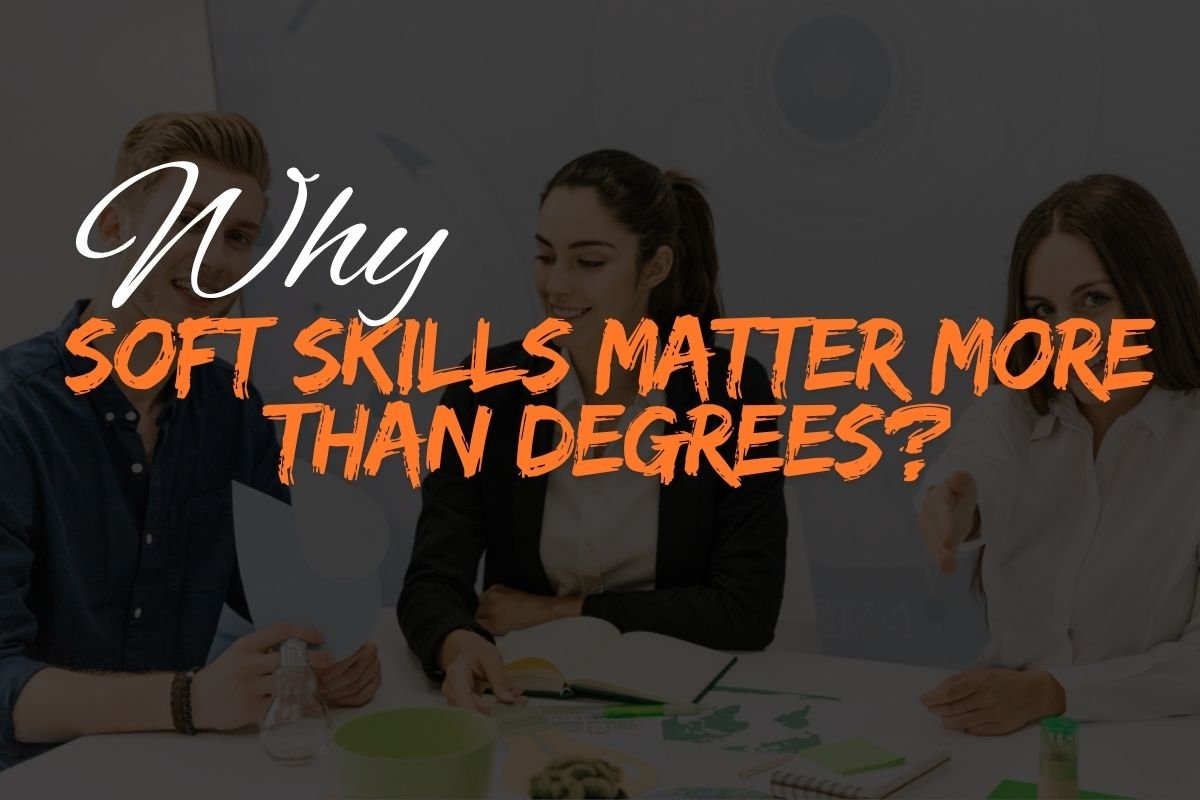
Soft skills are important because they determine how you work, communicate, and lead — and in 2026, employers rank them above degrees when making hiring decisions. For example, between two candidates for the same job, the one who communicates clearly and adapts easily usually gets hired over the one with only a stronger degree. This guide covers:
- Why the shift from credentials to capabilities is happening now
- The 8 core soft skills employers actually screen for
- How to develop these skills at any career stage, with real examples
This shift is happening because automation is rapidly reshaping global industries, making interpersonal skills, transferable skills, and adaptability more valuable than any formal qualification on paper.
While academic credentials still carry weight, the traditional idea of earning a degree to secure a job is quickly becoming outdated. Employers are no longer just asking “what do you know?” — they are asking “how do you work with others, handle pressure, and solve problems?” Understanding why soft skills are important can genuinely transform your career path, regardless of your educational background. Students who combine strong soft skills with proven study tips for students consistently outperform their peers — both inside the classroom and in the professional world
Why Are Soft Skills Important for Employers in 2026?
Academic qualifications and technical expertise still play a role, but employers now expect far more from modern learners. Companies increasingly prioritize individuals who bring valuable soft skills such as communication, teamwork, adaptability, creativity, leadership, problem-solving, and personality development skills.
At Enlightrs – digital services and learning platform, our learning content can lead you to such essential skills which help professionals thrive in digital workplaces. You can read our blog on soft skills importance in 2026 to learn many other skills which will be beneficial for your learning. In this skills development guide, you will learn different types of soft skills, why they are important, and how to build them — no matter where you are in life.
The Shift from Credentials to Capabilities
The modern shift from a degree to capabilities can get you know about why soft skills matter more than degrees. Not long ago, a university degree was a golden ticket for a person. As, today, modern qualities and abilities are shifting from credentials to capabilities, that ticket is losing its shine — fast.
After the pandemic reshaped the global workforce, companies began realizing something important: degrees do not guarantee performance. Meanwhile, AI started automating technical tasks that once required years of specialized education. As a result, employers are now prioritizing skills over degrees more than ever before. This has created a significant skills gap in the global workforce — millions of degree holders are unemployed while companies struggle to find candidates with the right soft skills to fill critical roles.
For example, Apple, Google, and IBM have all publicly dropped degree requirements for many roles. Instead, they scrutinize candidates for great soft skills: durable and transferable skills that hold value regardless of industry shifts.
Soft Skills or Hard Skills
According to a LinkedIn Workplace Learning Report, employers consider soft skills as important as hard skills. Therefore, technical knowledge has become outdated. On the other hand, there are some important skills built on communication, adaptability, and emotional intelligence have become demanding skills in the professional workforce. Furthermore, this shift is not slowing down as skills-based hiring is now the standard, not the exception.
What Are Soft Skills?
Before diving deeper to discuss why soft skills matter more than degrees, let us clarify exactly what soft skills mean first. Soft skills, also called interpersonal skills, are non-technical abilities that shape how you work, how you communicate, and how you interact with others. Unlike hard skills (such as coding or accounting), soft skills are behavioral and natural. These skills have the ability to define your character at work, not just your competence.
Quick Comparison of Hard Skills And Soft Skills
| Hard Skills | Soft Skills |
| Python programming | Communication |
| Financial modeling | Emotional intelligence |
| Data analysis | Adaptability |
| Medical diagnosis | Problem-solving |
| Legal research | Leadership |
Why Soft Skills?
In order to understand the reason behind why soft skills matter more than credentials, you must dive into core types of soft skills. As you can see, hard skills tell employers what you can do. Soft skills tell them how you will do it, and how you will treat people along the way. So, here are the eight foundational types of soft skills every employer values:
The Core Types of Soft Skills
Communication
Yes, communication is that kind of soft skills which includes verbal clarity, active listening, and even public speaking. Due to this value, every job requires it.
Emotional Intelligence (EQ)
Empathy is also a soft skill, and it is the engine behind EQ. It helps you understand others, manage conflict, and build trust.
Adaptability
A skill which enable a person to adapt according to the current situation is Adaptability. It is such kind of soft skill which lets you withstand under pressure. In short, Flexible thinkers can thrive in the world of constant change.
Leadership
Do you think that leadership is only a managing skill? If yes, you are thinking wrong, for it is not just for managers. Remember, a leaders is an individual contributor who leads projects, mentors peers, or takes initiatives, and demonstrate it daily.
Problem-Solving
It is one of the essential soft skills at the moment as most of the companies prefer a person who has problem-solving ability. Additionally, Problem-solving is deeply rooted in creative and critical thinking. The modern world thinks that AI has the great ability to solve the problems, but, in fact, AI can process data while it cannot replace human judgment.
Time Management
The role of self-discipline is of the great importance because the self-disciplined life teaches you the time management. The time management is not a skill, but it is a behavioral quality as well, which purely reflects in your personality and responsibilities.
Teamwork & Collaboration
Sometimes, it happens that a worker cannot handle a task at his own; he needs the collaboration of his team. This skill determines how well you function within a group, especially under pressure.
In short, if you want to know how to develop overall personal growth, you must explore personality development skills ; it covers the behavioral foundations that enable these abilities wo work. You can also get enough information about the core results of why communication matters more than degrees.
Importance of Soft Skills
1. The Ability to Adapt:
According to the World Economic Forum, around 39 % of the key skills required in the job market are expected to change by 2030. So, now it is essential for a personal to get ready to be changed according to the situation. Soft skills are only skills which can enable a person to adapt himself in the current situation. According to World Economic Forum, the static value of a degree has declined. Now, what matters more is the ability to adapt, learn continuously and apply one’s skills in new contexts.
2. Soft Skills As Human Skills
In fact, there has been no comparison between a machine’s outcomes and human skills because the skills which helps to run a machine or system are the technical skills , and these technical skills can be automated. On the other hand, it is reality humans skills are harder to replace. The modern technology has become advanced with the help of AI tools, and these tools can handle more of the routine. Hence, the value of human skills—empathy, creativity, collaboration—rises. Mastering these human skills may become more crucial than pure technical expertise.
3. Competency As A Soft Skill for Hiring
Modern hiring practices emphasize skills-based hiring rather than relying entirely on degrees. Wikipedia researchers have found that in job ads for technology-driven roles, soft skills such as critical thinking, flexibility, communication and problem-solving are highly demanded skills alongside or even ahead of other technical skills. Therefore, employers prefer competency as a soft skill for hiring rather than just credentials. The growing importance of soft skills in the workplace is now backed by global hiring data. This data shows that higher productivity and lower employee turnover rate has been 12% in these days.
4. Role of Soft Skills in ACV
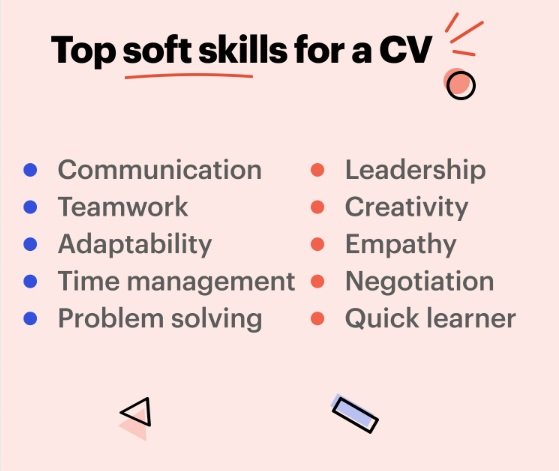
In the modern world of Artificial intelligence, having a certificate or degree may open doors, but what determines success in the professional career is often the soft skills: how you work with others, how you think, and how you handle challenges.
The 5 Most Critical Soft Skills Employers Want in 2026
The complete picture of the whole discussion is clear to us. Now, there is only need to focus on what actually appeals the employers, companies, and organizations to make hiring decisions today.
1. Communication as a Core Competency
This skill is standing at the top of every employer’s wish list for good reason. Whether you are a software engineer explaining a bug, a project manager aligning stakeholders, or a sales professional closing a deal, your ability to communicate clearly impacts the outcomes. According to LinkedIn’s Workplace Report, communication ranked as one of the most in-demand soft skills globally. This condition is applicable across every industry, from tech to education.
Example: A software developer who writes clean code but cannot explain it to non-technical clients creates a hindrance in the way to his success. On the other hand, a developer, who communicates well, becomes a bridge between teams, coworkers, managements and clients. Therefore, he gets promoted faster.
What strong communication looks like:
- Speaking clearly and concisely in meetings
- Writing emails that require no follow-up for clarification
- Listening actively before responding
- Presenting ideas confidently, even to leadership
2. Adaptability in a Changing Workplace
In 2026, Adaptability has become a survival skill for individuals. As the requirements of workplace is changing at an unprecedented pace, you should built adaptability which allows you to change yourself according to the situation. All other things have become constant, and they will remain unchanged, but soft skills’ flexibility — the ability to adjust, re-learn, and stay productive under new conditions — separates resilient professionals from stagnant ones.
Example: During the 2020 remote work shift, all those individuals who adapted quickly to digital collaboration tools continued to grow. On the other hand, regardless of their technical qualifications, those who resisted and did not shifted themselves accordingly fell behind.
Additionally, employers and the organizations are now investing in soft skills microlearning. Basically, these are short, targeted training modules that help employees build adaptability in real time, without any further delay.
3. Emotional Intelligence and Teamwork
It is one of those soft skills of empathy which empower you with an ability to recognize, understand, and manage both your own emotions and those of others. Not only it is a skill to deal with emotions, but also it is a quality which makes you a more effective leader, a stronger negotiator, and a more trusted team member. This is particularly vital for product managers, HR professionals, consultants, and sales teams, where relationship management is central to success.
Example: A product manager with high emotional intelligence can mediate between engineering teams and business stakeholders without creating friction. On the other hand, a low-EQ manager in the same role often escalates conflicts that drain team productivity.
What empathy looks like in practice:
- Staying calm under criticism
- Recognizing when a colleague is overwhelmed and responding with support
- Owning mistakes without defensiveness
- Celebrating team wins without taking sole credit
4. Problem-Solving and Critical Thinking

Here is the hard truth that AI can analyze faster than any human. In fact, AI has a powerful ability to make thing easy. However, it cannot replace human judgment, ethical reasoning, or contextual problem-solving. These are the human only who can show their judgment and can demonstrate a problem-solving skill. Remember, Problem-solving skill is an ability to identify issues, evaluate options, and act decisively, and it remains one of the most valued soft skills by employers in 2026. It applies universally from data scientists diagnosing model errors, engineers troubleshooting system failures, accountants resolving financial discrepancies to project managers navigating scope creep.
Example
A data scientist who spots an error in data and knows how to deal with it because of his skill and background knowledge. On other hand, an individual who can run only algorithms is unable to deal with the problems and its solution. Problem-solving needs critical thinking which feeds directly into leadership. Such professionals, who think clearly and solve problems calmly, accelerates career growth regardless of formal credentials.
5. Leadership and Time Management
Many people misunderstand the leadership skill. It is not about a job title or corner office. Instead, it is about influence, initiative, and accountability at every level. Similarly, time management is also a soft skill because it involves self-regulation, self-discipline, and the ability to prioritize the time effectively. In fact, these are only behavioral traits which you cannot get through a university course.
Example
A college student who manages a part-time job, leads a student society, and still submits assignments on time is demonstrating both leadership and time management skills that translate directly into workplace success.
These skills matter equally for high school teens to build early habits and preparing for their first job. If you are a student trying to build these habits early, our student study tips offer a practical starting point for developing self-discipline and time management to strengthen your academic foundation.
How Employers Actually Assess Soft Skills
You might wonder: can you even measure something as behavioral as a soft skill? The answer is yes — and employers are getting very good at it.
Here is how soft skills are integrated into candidate scores:
- Behavioral interview questions: “Tell me about a time you handled conflict on a team.” These questions are specifically designed to surface interpersonal skills.
- Soft skill assessment tools: Psychometric tests and situational judgment tests now form a standard part of many hiring processes.
- Soft skill storytelling: Candidates who use the STAR method (Situation, Task, Action, Result) to frame their experiences demonstrate both communication ability and self-awareness.
- Group exercises and case studies: These reveal collaboration, leadership, and problem-solving in real time.
Furthermore, many organizations now use dedicated soft skill assessment tests during onboarding to identify training needs . These tests are not just for new hires, but they are for existing employees too.
How to Develop Soft Skills (At Any Stage)
The good news? Soft skills can absolutely be learned and developed — at any age, in any industry. Unlike a degree, you do not need tuition fees or three years of study. You need intention, practice, and consistency. Structured soft skills training can accelerate your development significantly and make you a more competitive professional in 2026, whether through online courses, workplace workshops, or mentorship programs,
Here are actionable ways to start:
- Attend workshops or webinars focused on communication, leadership, or emotional intelligence
- Seek mentorship from someone whose professional presence you admire
- Join volunteer programs — these build teamwork, empathy, and adaptability organically
- Use microlearning platforms like Coursera, LinkedIn Learning, or Udemy for short, targeted skill modules
- Practice reflective journaling to develop self-awareness — the foundation of EQ
For Students and Teens
Building soft skills early creates a significant career advantage. Fortunately, you do not need a job to start.
Practical starting points:
- Join your school’s debate club to develop communication and public speaking
- Take on a leadership role in a student organization to practice leadership as a soft skill
- Participate in group projects to sharpen teamwork and collaboration
- Set weekly study goals to build time management habits
For students who struggle with pressure or performance anxiety, learning to manage stress is itself a soft skill. This guide help you learn how to stay calm during exams along with practical strategies that build both emotional resilience and self-regulation — foundational soft skills for any career.
For Working Professionals
Soft skills have equal importance for students and professionals. If you are already working in an organization or a company, soft skills training is essential and more accessible than ever. There are hundreds of approaches you can adopt to train yourself. First of all, you must learn how to deal with specific interpersonal challenges. For this purpose, you can get enrollment in a soft skills trainer certificate. It will help you develop soft skills, and you can also teach others as well. Additionally, your participation in cross-functional projects can enhance your adaptability and collaboration capabilities.
Furthermore, all employers, who invest in employee soft skills training consistently, report higher retention, better team performance, and stronger client relationships. It is not only good for employees, but it is good for business too. For those professionals, who are planning to pursue their competitive exams or structured career paths, strong soft skills also play a role in standing out. For context, see how structured preparation connects to broader career readiness in this complete guide to CSS preparations..
Soft Skills Examples
Even Google figured out that why soft skills are important in real professional life. The internal research project — Project Oxygen — showed that the best managers at Google weren’t great because of their technical knowledge, but they were great because they listened well, showed empathy, and communicated clearly. That’s a perfect example of how to develop soft skills while working at one of the world’s biggest companies.
Practice-Based Examples
So, in order to understand the importance and the way to build these soft skills, we will have to undergo a few practical ways:
- Practice active listening: You must practice to be an active listener while you are in team meeting. What you have to do is only to focus completely the words of others in that meeting. At First, listen what others say then enter into discussion.
- Volunteer for cross-team projects: Comfort zone is one of our favorite zones in the professional career. On the other hand, you should leave your safe place and force yourself to work with people outside your comfort zone voluntarily.
- Say yes to presentations: Some people usually feel shyness while facing others in meetings. However, in the case of improving soft skills, you should come forward and participate in the meetings or even say yes to presentation. The reason is that speaking in front of others builds confidence fast.
In short, for building and improving soft skills, the only key is consistency. You cannot become professional and expert at soft skills by reading about them only. You will get better by daily practice.
In-Demand Soft Skills for 2026 & Beyond
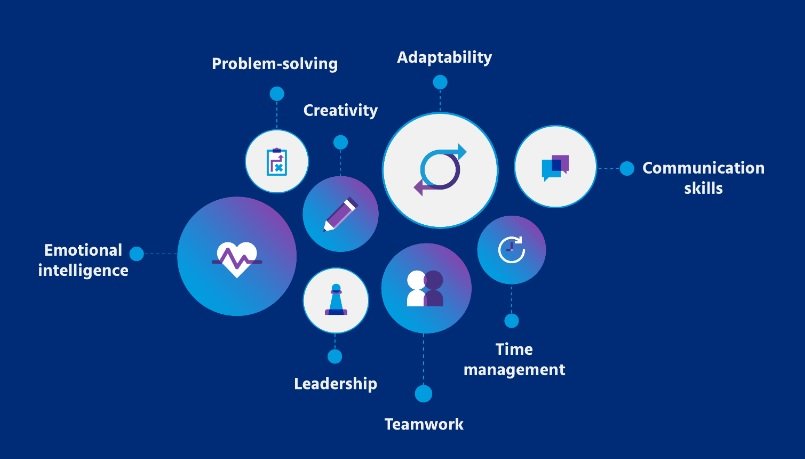
Based on recent research, the following soft skills are especially valuable:
- Effective Communication including remote/hybrid communication is most necessary skill to communicate at a work place.
- Collaboration & Teamwork has always been one of the most in demand skills for 2026 which employers need from their workers. In fact, no one can achieve success with any teamwork and mutual collaboration among each other.
- Adaptability / Learning Agility is a hard skill and ability to pivot, learn new tools/processes.
- Emotional Intelligence (EQ) help you understand and manage your own emotions.
- Critical Thinking & Problem-Solving cannot be ignored in the learning process as described above, every employer prefers hiring a worker with an ability of critical thing and problem-solving approach.
- Creativity & Innovation also makes a difference while learning a soft skill. It has worth we handle routine tasks.
- Resilience & Work Ethic keep you staying productive in uncertain environments.
How to List Soft Skills in Resume?

Being a job seeker, we commit a common mistake. A job seeker always write soft skills for resume entries like “good communicator”, good speaker, good teacher, efficient manager or “team player” and stop there. That tells a hiring officer almost nothing.
Instead, show the skill through a result. For example, rather than writing “strong communicator,” try something like: “Ran weekly team check-ins for 12 people, which helped cut project delays by 30%.”
In short, convert your generic phrase into A real proof; believe me, proof is everything in a competitive job market.
Free Download: Soft Skills Assessment Test
Not sure where your soft skills actually stand right now? Most people guess, but guessing gets you nowhere. We have put together a simple, honest soft skills assessment test that takes less than 5 minutes to complete. It covers 20 real workplace skills across 5 key areas: communication, emotional intelligence, teamwork, adaptability, and work ethic.
Rate yourself from 1 to 5 on each skill, add up your score, and find out exactly where you stand — whether you are just starting out or already performing at an expert level, this test can help you evaluate yourself.
Download it free, print it out, or fill it in digitally. No sign-up needed.
Conclusion: Degrees Open Doors — Soft Skills Keep Them Open
To summarize the whole article, it can be said that a degree can get your CV noticed, and it can open doors to your future. However, great soft skills keep these doors open. Therefore, once you get hired on the basis of your soft skills, your career growth becomes unstoppable. Professionals with strong soft skills get promoted faster, retained longer, and earn significantly more than those who rely on credentials alone.
In 2026, the most competitive professionals are not necessarily to be educated; they should be equipped with powerful soft skills with the professional background knowledge. Such individuals communicate clearly, adapt quickly, lead with empathy, solve problems creatively, and manage themselves with discipline. The importance of soft skills in the workplace is no longer a debate; it is a documented reality backed by hiring data, employer surveys, and workforce research worldwide.
So, start today — not tomorrow, not next week.
At first, do a complete audit of your own transferable skills honestly. Then, identify the skills gap and commit to closing it — one conversation, one challenge, and one intentional habit at a time. At the end, here is your simple 3-step action plan to start right now:
- First: Take our Free Soft Skills Assessment Test above and identify exactly where you stand today.
- Second: Pick ONE soft skill from this guide that you want to improve first — communication, adaptability, or emotional intelligence — and practice it deliberately every single day for 30 days.
- Third: Visit Enlightrs for more beginner-friendly guides on digital skills, career growth, and personal development — all designed specifically for students and professionals in 2026.
Remember, a degree opens the door, but your soft skills determine how far you walk through it. The professionals winning in 2026 are not necessarily the most educated; they are the most skilled, adaptable, and emotionally intelligent. That can be you — starting today!
Frequently Asked Questions
In 2026, AI handles many technical tasks that once required years of formal education. Major employers like Google and Apple have already dropped degree requirements in favor of skills-based hiring. Degrees open doors, but soft skills are what keep them open.
The most valued soft skills by employers in 2026 include communication, adaptability, emotional intelligence, problem-solving, leadership, and time management.
Yes, time management is a soft skill because it reflects behavioral qualities — specifically, self-discipline, prioritization, and the ability to stay organized under pressure. These are not technical abilities you learn from a textbook. Instead, they develop through practice, self-awareness, and intentional habit-building over time.
Absolutely, soft skills can be developed at any stage of life through coaching, workshops, microlearning, volunteering, mentorship, and consistent self-reflection. Unlike a university degree, they require no formal enrollment, but a commitment to grow.