Why Soft Skills Matter More Than Degrees in 2026?
Some students are curious to know why soft skills matter more in 2026? The degree has so much important in today’s fast-changing digital world that everyone has ignored the importance of soft skills. We should consider it a serious threat towards the future success, as learning is no longer limited to degrees alone. As technology advances at incredible speed and automation reshapes global industries, the traditional idea of “earn a degree → get a job” is quickly becoming outdated. Students who combine soft skills with proven student study tips to build academic and professional success consistently outperform their peers both inside and outside the classroom
Academic qualifications and technical expertise still play a role, but employers now expect far more from modern learners. Companies increasingly prioritize individuals who bring valuable soft skills—such as communication, teamwork, adaptability, creativity, leadership, problem-solving, and personality development skills. At enlightrs – digital services and learning platform, our learning content can lead you to such essential skills which help professionals thrive in digital workplaces. You can explore read our guide on soft skills importance in 2026 to learn how to earn money online. Our why soft skills matter more than degrees bring collaboration and innovation in learning high-income skills which matter more than ever.

Importance of Soft Skills
1. The pace of change:
According to the World Economic Forum, around 39 % of the key skills required in the job market are expected to change by 2030. World Economic Forum with such disruption, the static value of a degree has declined. What matters more is the ability to adapt, learn continuously and apply one’s skills in new contexts.
2. Technical skills can be automated—but human skills are harder to replace
In fact, Technical skills can be automated, but reality also exist that human skills are harder to replace. As AI and automation handle more of the routine, technical tasks, the value of “human” skills—empathy, creativity, collaboration—rises. The Harvard Business Review notes that mastering soft skills like communication and critical thinking may become more crucial than pure technical expertise. Harvard Business School Library
3. Employers are hiring for competency, not just credentials
Modern hiring practices emphasize skills-based hiring rather than relying entirely on degrees. Wikipedia Researchers have found that in job ads for technology-driven roles, soft skills such as critical thinking, flexibility, communication and problem-solving are frequently demanded alongside or even ahead of hard technical skills.
4. Degrees don’t always guarantee a job
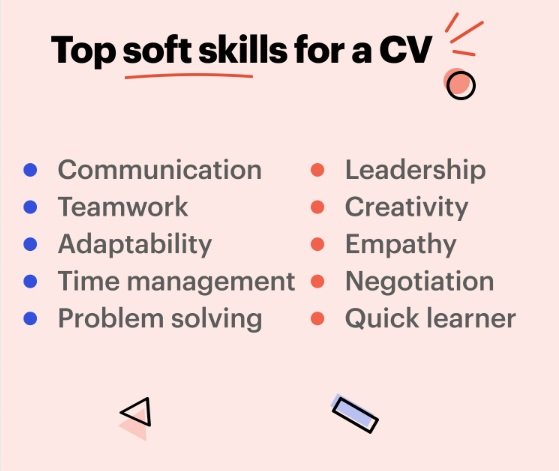
Are you wonder why are soft skills important? Having a certificate or degree may open doors, but once inside, what determines success—promotion, retention, career growth—is often the soft skills: how you work with others, how you think, how you handle challenges.

Focus on Communication: The Foundation of Soft Skills
1. What strong communication looks like
- Explaining ideas clearly both verbally and in writing.
- Listening actively, asking clarifying questions.
- Adapting your message to different audiences (peers, managers, clients).
- Being open, respectful and constructive in dialogue.
2. Why it matters
- It builds trust and rapport among teams and clients.
- It prevents misunderstandings, saves time, and improves productivity.
- In remote or hybrid work, clear communication is essential to compensate for fewer in-person cues.
- Data shows that communication is the most sought-after job skill in many fields.
Real-world example
Imagine a team project with members across countries/time zones. A technically skilled person who cannot convey progress, respond to questions, or align with the group may slow things down—or create conflict. Conversely, someone with moderate technical ability but excellent communication can keep things moving, clarify expectations, and align efforts effectively.
Teamwork: Collaboration Over Solo Performance
What teamwork involves
- Cooperating with others, sharing responsibilities, trusting team members.
- Being open to other viewpoints and integrating them.
- Handling conflict constructively when it arises.
- Recognising that your success is tied to the group’s success.
Why teamwork is in high demand
- Projects are rarely done in isolation: cross-functional teams are common.
- Diverse teams (different backgrounds, skills, perspectives) are seen as more innovative.
- The ability to collaborate well signals that you’re versatile and scalable in the organization.
Research highlights that teamwork and collaboration appear among the top soft skills employers seek.
Application tip In your job application or interview, don’t just say “I’m a team player.” Offer specific examples: “In project X, I worked with marketing and engineering teams to…”. Show how you added value through collaboration.

Problem-Solving: Thinking Beyond What’s in the Book
Defining strong problem-solving
- Identifying the real root of a challenge (not just the symptoms).
- Generating creative solutions and evaluating trade-offs.
- Implementing decisions, learning from outcomes, iterating when needed.
- Adapting strategies when the initial plan doesn’t work.
Why problem-solving beats just technical know-how
- Technical tasks often have straightforward solutions; the real challenge is what to build, how to prioritise, how to work around constraints.
- Employers expect people who can think critically, adapt when assumptions fail, and evolve solutions.
- Studies show that in highly technological roles, soft skills such as problem-solving and adaptability rank high in job-ad requirements.
Example in action Suppose you’re a software developer. There are many peers who know the language or framework you use. What sets you apart is: you notice a recurring bug, you dig into how it affects users, you propose a design change, you iterate with the UX team, and you track performance improvement. That’s problem-solving in action.
In-Demand Soft Skills for 2026 & Beyond
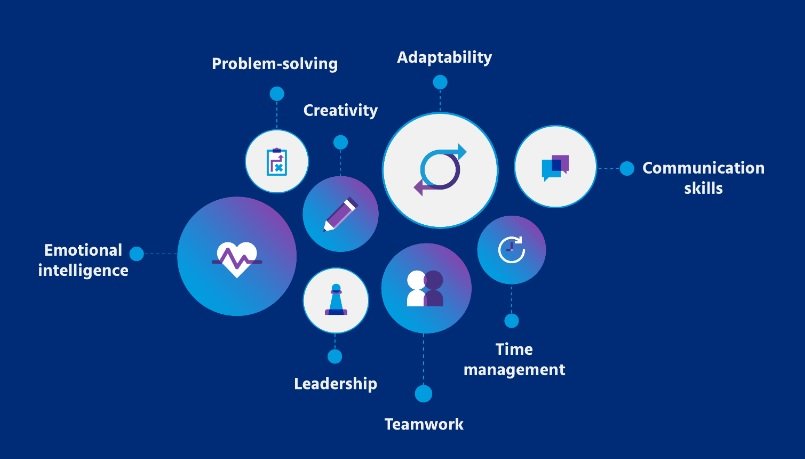
Based on recent research, the following soft skills are especially valuable:
- Effective Communication including remote/hybrid communication is most necessary skill to communicate at a work place.
- Collaboration & Teamwork has always been one of the most in demand skills which employers seek in 2026.
- Adaptability / Learning Agility is a hard skill ability to pivot, learn new tools/processes.
- Emotional Intelligence (EQ) help you understand and manage your own emotions.
- Critical Thinking & Problem-Solving cannot be ignored in the learning process as described above.
- Creativity & Innovation also makes a difference while learning a soft skill. It has worth we handle routine tasks.
- Resilience & Work Ethic keep you staying productive in uncertain environments.
Why Degrees Alone Are Not Enough
Limited signal of future performance
A degree indicates that you learned certain content, but not necessarily that you can communicate it, collaborate with a team, adapt, or lead under pressure. These behavioral and interpersonal dimensions are less visible in transcripts.
Mismatch between education and employment needs
Many degrees emphasize theoretical knowledge, but employers increasingly value practical soft-skills and adaptability. The gap between what academia teaches and what modern workplaces need can leave graduates under-prepared.
Credentials become easier to obtain
With more people earning degrees, diplomas lose some of their differentiating power. What distinguishes one applicant from another often becomes the behavioural and soft-skills dimension.
Career mobility requires more than a degree
As job roles evolve, switching fields, taking on new responsibilities, or advancing requires more than technical know-how. You need to work with new stakeholders, learn new tools, lead teams, and solve unfamiliar problems—all soft-skill domains.
How You Can Develop & Showcase Soft Skills
1. Practice proactively
- Volunteer in team settings or non-profit groups to build collaboration and leadership skills.
- Take on small group projects, whether at work or outside, and consciously reflect on your role: what did you communicate? where did you collaborate?
2. Use behavioral evidence
When writing a resume or speaking in an interview, frame your story around actions and results: “I led a cross-department team to reduce processing time by 20% by…” rather than just listing “Good communicator”.
3. Seek feedback and reflect
Soft skills improve through feedback: ask peers or mentors about how you handle meetings, whether your ideas were understood, how you performed in teamwork. Reflect on lessons and make adjustments.
4. Combine with learning agility
Take online courses or certifications not only in technical fields but also in communication, leadership, teamwork, problem-solving. Showing that you are deliberately developing your skills counts.
5. Be adaptable and open to change
When new tools/processes come in at your workplace, volunteer to learn them. Show your ability to pivot and stay current. This adaptability signals soft-skill strength in a rapidly evolving market.
Examples of Soft Skills
In real life we will have to learn some real-world soft skills examples that are reshaping careers in 2026. When most people hear “soft skills”, they actually think of some vague or absurd words like “team player” or “good communicator.” In fact, the communication has now turned the table, and these skills are the real difference between getting hired, getting promoted, or getting left behind.
To truly understand why soft skills matter more in 2026, you need to see them in action — not just read a definition.
What Do Soft Skills Actually Look Like at Work?
Here are some simple but powerful soft skills examples from everyday workplaces:
- A project manager who doesn’t know how to code but keeps the whole team calm, on track, and talking to each other — and somehow always meets the deadlines.
- A junior marketer who listens carefully to what customers are saying, adjusts the plan without making it a big deal, and works well with every department — even outperforming people with more experience.
- A data analyst who doesn’t just dump numbers into a spreadsheet but actually tells a story with the data — and because of that, gets executives to act on it.
None of these people succeeded because of their degree. They succeeded because of how they work with people and handle situations. That’s the power of soft skills.
Examples from Real Companies
Even Google figured out that why soft skills are important in real professional life. The internal research project — Project Oxygen — showed that the best managers at Google weren’t great because of their technical knowledge, but they were great because they listened well, showed empathy, and communicated clearly. That’s a perfect example of how to develop soft skills with examples straight from one of the world’s biggest companies.
So, in order to understand what does actually building these skills look like day-to-day?, we will have to undergo a few practical ways:
- Practice active listening: You must practice to be an active listener while in your next team meeting. What you have to do is only to focus completely the words of others in the meeting. First listen what others say then enter into discussion.
- Volunteer for cross-team projects: Comfort zone is one of our favorite zones in the professional career. On the other hand, you should leave your safe place and force yourself to work with people outside your sanctuary.
- Say yes to presentations: Some people usually feel shyness while facing others in meetings. However, in the case of improving soft skills, you should come forward and participate in the meetings or even say yes to presentation. The reason is that speaking in front of others builds confidence fast.
The key is consistency. You don’t get better at soft skills by reading about them. You get better by doing it practically.
What Is Soft Skills Training?
Usually, some people wonder about a question related to soft skills training. A lot of people ask: “What is soft skills training, and why are big companies investing in it?”. Actually, Soft skills training is not a single seminar you attend once and forget, it’s an ongoing process that includes coaching sessions, real-life practice scenarios, peer feedback, and regular soft skills assessment tests to see how much you’ve actually grown.
Today, companies like IBM, Amazon, and Deloitte have built full soft skills programs into their employee development plans — because they’ve seen the results firsthand. Less conflict, better collaboration, higher retention, and stronger overall performance. That’s not a coincidence.
How to List Soft Skills for Resume?
Being a job seeker, we commit a common mistake. A job seeker always write soft skills for resume entries like “good communicator”, good speaker, good teacher, efficient manager or “team player” — and stop there. That tells a hiring officer almost nothing.
Instead, show the skill through a result. For example, rather than writing “strong communicator,” try something like: “Ran weekly team check-ins for 12 people, which helped cut project delays by 30%.”
In short, convert your generic phrase into A real proof; believe me, proof is everything in a competitive job market.
Conclusion:
In today’s job market—and even more so for the future—the message is clear: soft skills matter more than degrees alone. While a degree may get you noticed, it’s your ability to communicate, collaborate, solve problems, adapt, and learn that will drive your success. If you focus on developing those human-centric capabilities, you’ll be a candidate—and then a professional—who stands out and thrives no matter how the job landscape shifts.

Free Download: Soft Skills Assessment Test
Not sure where your soft skills actually stand right now? Most people guess — but guessing gets you nowhere. We have put together a simple, honest soft skills assessment test that takes less than 5 minutes to complete. It covers 20 real workplace skills across 5 key areas — communication, emotional intelligence, teamwork, adaptability, and work ethic.
Rate yourself from 1 to 5 on each skill, add up your score, and find out exactly where you stand — whether you are just starting out or already performing at an expert level, this test can help you evaluate yourself.
Download it free, print it out, or fill it in digitally. No sign-up needed.
Frequently Asked Questions (FAQs)
Yes, In 2026, employers value soft skills like communication, problem-solving, and adaptability more because they improve teamwork and long-term performance.
Yes, many companies now hire based on skills, experience, and attitude rather than degrees—especially in digital and remote roles.
The most important soft skills include communication, critical thinking, emotional intelligence, leadership, and time management.
Yes, degrees still matter in fields like medicine, engineering, and law—but they are no longer enough on their own.
You can improve soft skills through practice, online courses, real-world experience, feedback, and continuous learning.